

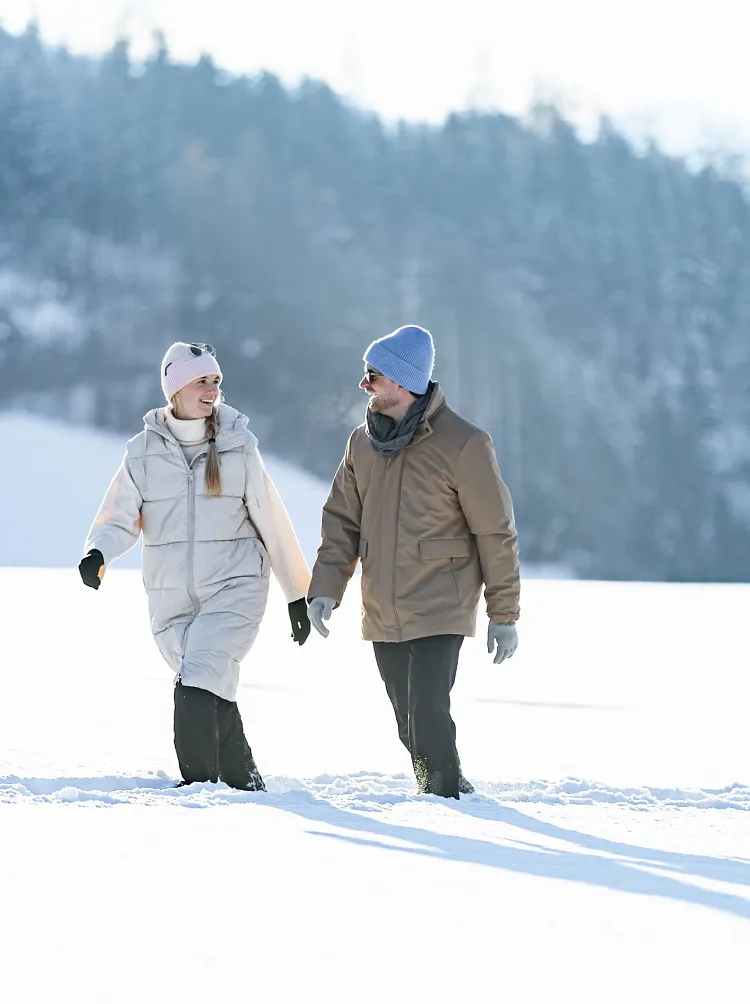

Snow-covered paths, crisp winter air and the tranquillity of the mountains accompany you on your winter hikes in the Karwendel Silver Region. On well-groomed trails, such as on the sunny Pillberg or the Weerberg, you’ll discover the wintry landscape step by step whilst enjoying the sweeping views of the snow-covered mountains.

Classification of winter walking trails
How strenuous is your route?
The winter walking trails in the Karwendel Silver Region are signposted in accordance with the Tyrolean hiking and mountain trail concept. The signposts are purple with white lettering and a snowflake. The distance is shown on the sign rather than the walking time, as the route can take different lengths of time depending on the weather.
Technically, all winter hiking trails are easy: they are sufficiently wide, only moderately steep and not exposed. With suitable footwear, they can be walked easily even in bad weather and snowfall. The only differences lie in the level of fitness you should have.
Easy – up to 5 kilometres and up to 200 metres of elevation gain.
Moderate – 5 to 12 kilometres or up to 500 metres of elevation gain.
Difficult – 12 kilometres or more, or 500 metres of elevation gain or more.
Good to know: Winter walking trails are avalanche-safe, so you don’t need avalanche equipment. However, you do need to be sure-footed on snow, as the ground conditions change with the weather and time of day. Particularly in late winter, the snow is often icy in the morning and slushy in the afternoon.
You can find all the information on classification here
Rules of conduct for winter walking
Be considerate when hiking in winter
In winter, many wild animals are in energy-saving mode. By following a few rules, you can ensure they are left in peace.
Stay on designated paths in the forest. Where possible, only cross woodland areas on designated paths and routes. Venturing off these paths disturbs animals in their winter roosts.
Observe wildlife from a distance. Be mindful of their habitats and give the animals a wide berth where possible.
Don’t walk in complete silence.It may sound unusual, but it helps: if animals hear you early on, they’re less likely to panic.
Be mindful of the time of day. Do not venture out into the countryside before sunrise or after sunset.
Keep dogs on a lead. Dogs running free are a major nuisance for wildlife in winter.
You can find all the rules of conduct here
Tour planning & protection against the cold
In winter, good preparation is essential. By following a few basic rules, you’ll stay safe on your trip and return warm and cosy.
Choose the right route. Be honest when assessing your own ability and fitness, as well as that of your companions – and especially that of any children. In the snow, every route takes more time and energy than in summer.
Check the weather and avalanche conditions. Before setting off, check the weather forecast and the avalanche report.
Allow plenty of time. The days are short in winter. Set off early enough and plan your trip so that you’re back before dusk. Let someone know where you’re going and when you expect to be back.
Stay on marked paths. This keeps you safe and allows wildlife to be left in peace during winter. Observe any closures and opening hours.
Stay warm and dry. Dress in layers so that you can take a layer off when you’re exerting yourself and put it back on during breaks. A hat, gloves and a scarf or buff protect your sensitive areas. A dry change of clothes in your rucksack will help if it gets cold.
Drink enough. Even in the cold, your body loses a lot of fluid; you just notice it less. Take plenty to drink with you – ideally warm in a thermos flask – and a small snack for in between meals.
Watch out for warning signs. White, numb patches on your nose, ears, fingers or toes can indicate frostbite. If this happens, get into the warmth quickly and warm the affected areas slowly – do not rub them.
Don’t underestimate the sun. Snow reflects light intensely. Sunglasses and sun cream are essential even on cold days.
In an emergency. Alpine emergency number 140 or European emergency number 112.
Stay safe on the go: Click here for the emergency app.
All tips for planning winter tours