
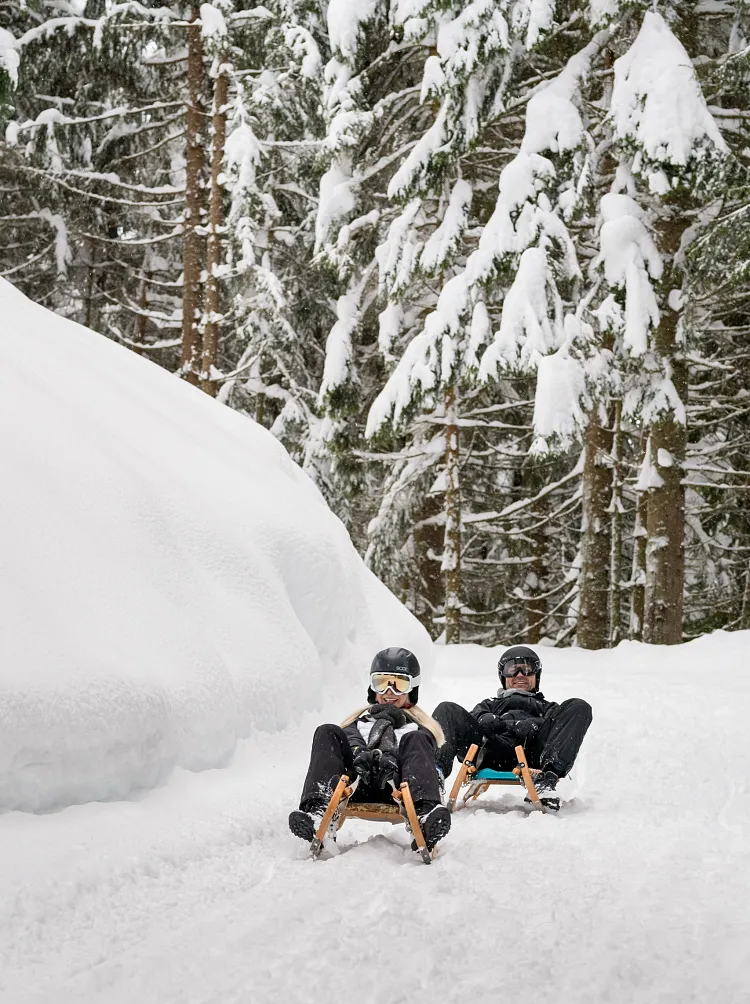

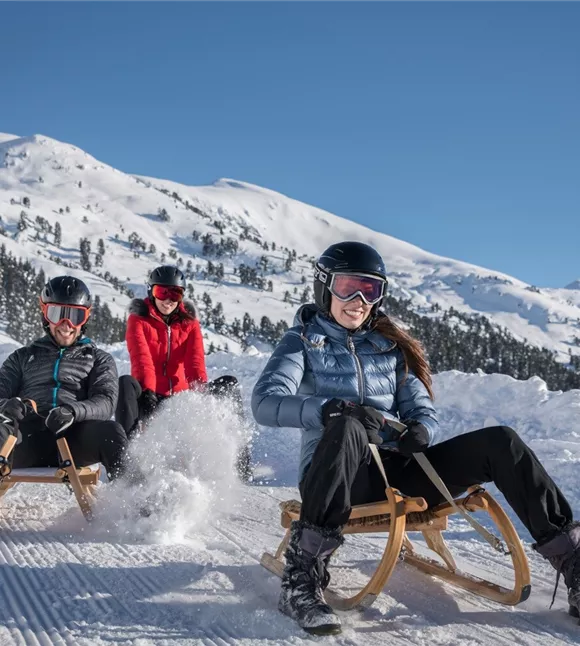
First up the hill, then hurtling back down into the valley: tobogganing is simply part and parcel of winter in the mountains. A highlight is the longest toboggan run in the region , which winds its way nine kilometres from the Hecherhaus at the Kellerjoch down to Freundsberg Castle in Schwaz . Whether you’re taking it easy with the family or going a bit faster, winter fun is guaranteed on the toboggan runs of the Karwendel Silver Region.

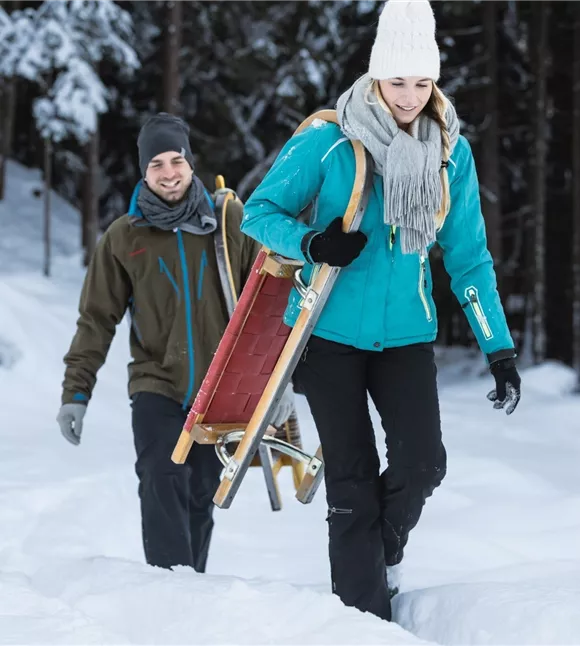
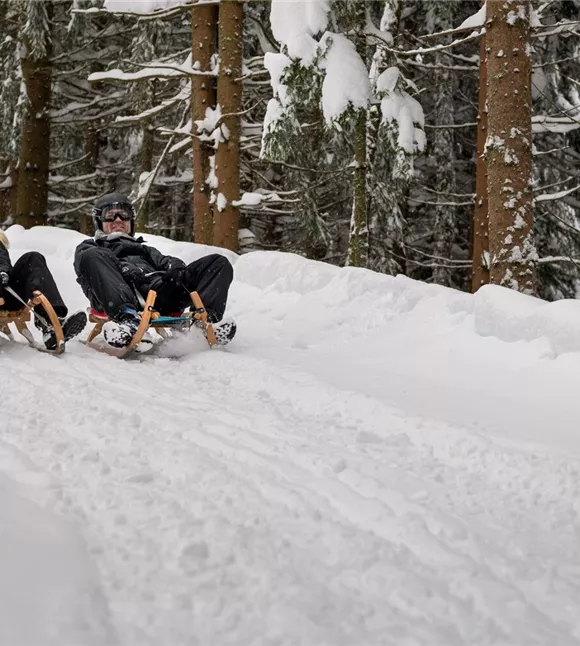
Classification of toboggan runs
How difficult is your toboggan run?
The natural toboggan runs in the Karwendel Silver Region are classified into three levels of difficulty in accordance with the Tyrol provincial guidelines. You can tell the difficulty from the sign at the start of the run: the background colour is blue, red or black.
Blue toboggan runs – easy, with a wide track, a gentle gradient and long, flat sections to slow down before the bends. The route is straightforward. Suitable for families and also for beginners.
Red toboggan runs – moderately difficult, with longer, steeper sections and shorter braking distances. You should know and be able to apply the basic braking and steering techniques.
Black toboggan runs – difficult, with short, sometimes steep braking sections, challenging combinations of bends and a route that is sometimes difficult to follow. For experienced tobogganists with well-developed braking and steering skills and a toboggan with a flexible frame and curved, angled runners.
Good to know: The classification assesses the technical difficulty under normal snow conditions, not the danger posed by a run. Sections that are more difficult than the run as a whole are marked as ‘walking sections’. On these sections, you must walk with your sledge rather than ride it.
You can find all further information on classification here
Rules of conduct for tobogganing
Be considerate on the toboggan run
Tobogganing is fun, but it’s faster than many people realise. A few rules will help ensure everyone gets to the bottom safely.
Only toboggan on authorised runs. Make sure the toboggan run is open. Ski slopes are off-limits; there is a high risk of collisions with skiers.
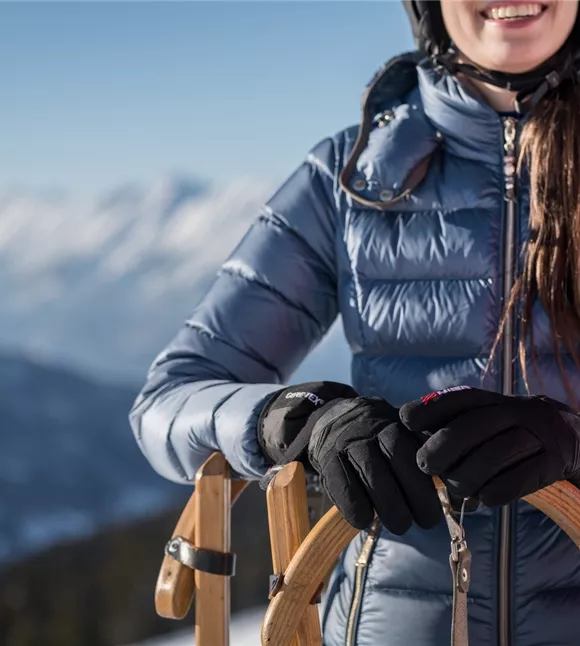
Choose the right toboggan. Use a steerable toboggan. Plastic bobsleighs and sliding discs are unsuitable for toboggan runs.
Adjust your speed. Slide at a speed appropriate to your ability, the run, the snow, ice and weather conditions, and the traffic on the run.
Never stop in narrow sections. Do not stop in blind spots, and only cross the run where you can see clearly and be seen.
Warn those coming uphill. If someone is walking uphill and hasn’t noticed you, make yourself heard in good time by shouting.
Be visible in the dark. A head torch and reflective clothing are essential for night-time tobogganing.
Arrive together. Make sure your group is complete before you set off and when you reach the bottom.
You can find all the rules of conduct here
Tour planning & protection against the cold
In winter, good preparation is essential. By following a few basic rules, you’ll stay safe on your trip and return warm and cosy.
Choose the right route. Be honest when assessing your own ability and fitness, as well as that of your companions – and especially that of any children. In the snow, every route takes more time and energy than in summer.
Check the weather and avalanche conditions. Before setting off, check the weather forecast and the avalanche report.
Allow plenty of time. The days are short in winter. Set off early enough and plan to be back before dusk. Let someone know where you’re going and when you expect to return.
Stay on marked paths. This keeps you safe and allows wildlife to be undisturbed in winter. Observe any closures and opening hours.
Stay warm and dry. Dress in layers so that you can take a layer off when exerting yourself and put it back on during breaks. A hat, gloves and a scarf or buff protect the most vulnerable areas. A dry change of clothes in your rucksack will help if it gets cold.
Drink enough. Even in the cold, your body loses a lot of fluid; you just don’t notice it as much. Take plenty to drink with you – ideally something warm in a thermos flask – and a small snack for in between.
Watch out for warning signs. White, numb patches on your nose, ears, fingers or toes can indicate frostbite. If this happens, get into the warmth quickly and slowly warm the affected areas – do not rub them.
Don’t underestimate the sun. Snow reflects light very strongly. Sunglasses and sun cream are essential even on cold days.
In an emergency. Alpine emergency number 140 or the European emergency number 112.
Stay safe on the go: Click here for the emergency app.
All tips for planning winter tours