

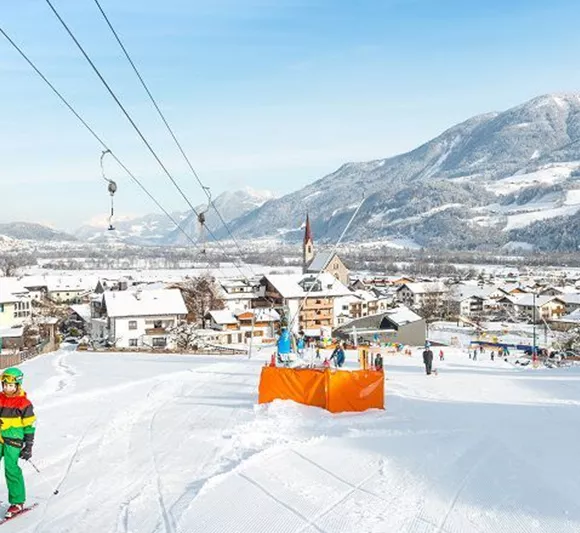
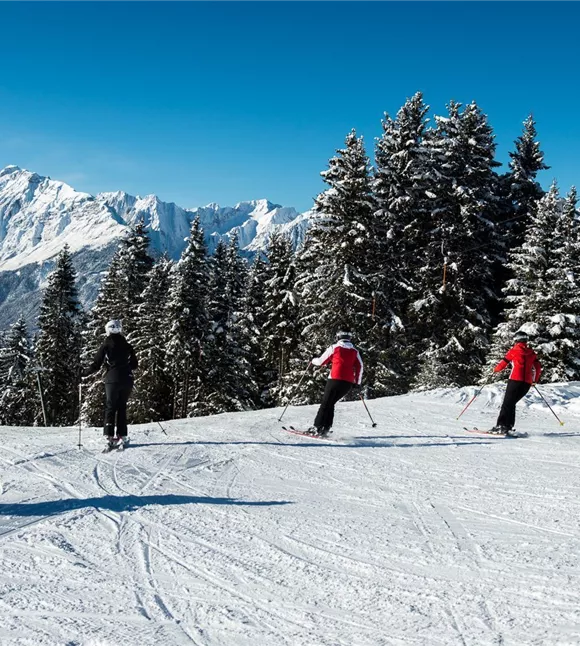
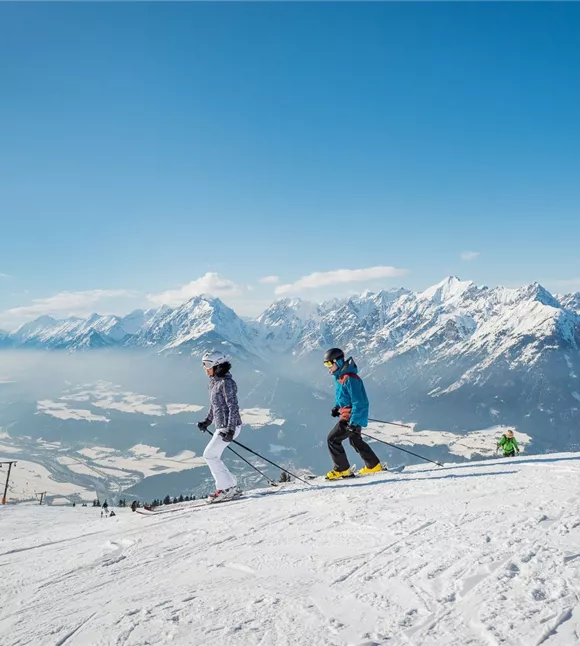
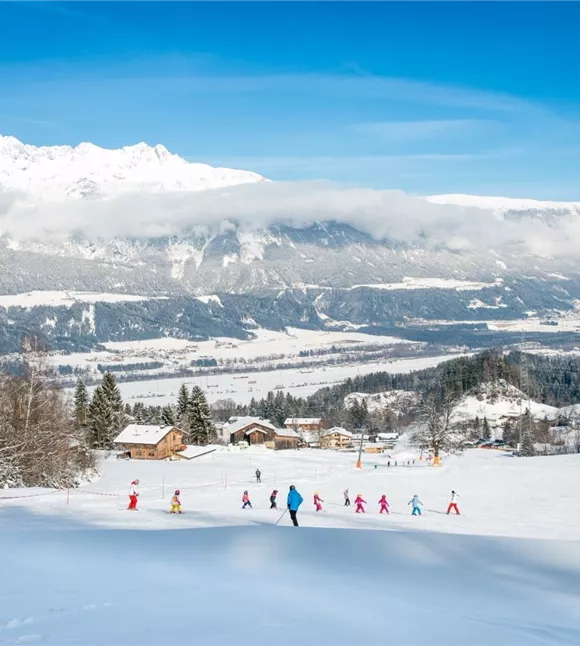
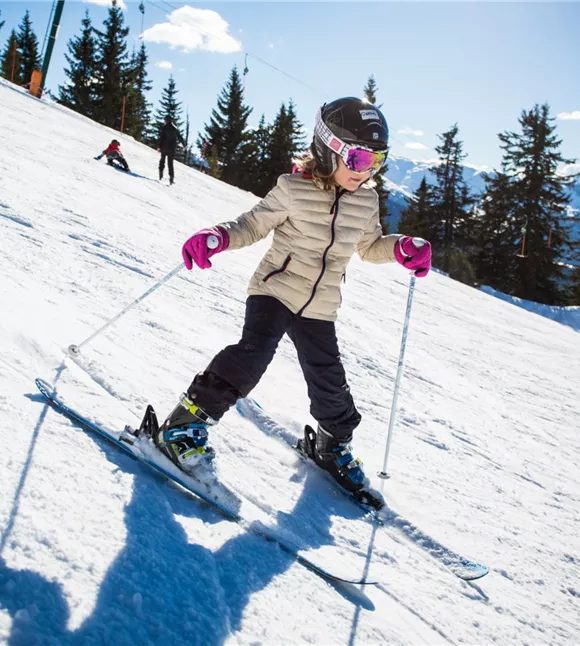
Skiing doesn't have to be fast to be beautiful. In the four small ski areas of the Silberregion Karwendel, things are relaxed, with plenty of space to enjoy. The largest is the Kellerjoch ski area above Schwaz, with slopes reaching around 1,890 meters, which are well-suited for families and beginners.




Classification of ski slopes
How difficult is your slope?
As is the case throughout Austria, the ski slopes in the Karwendel Silver Region are divided into three levels of difficulty. The difficulty is indicated by the colour on the piste map and the markings: blue, red or black.
Blue runs – easy, with a maximum gradient of 25 per cent. Well suited to beginners, children and anyone who wants to take it easy.
Red slopes – intermediate, with a gradient of up to 40 per cent, and even steeper on short sections. For skiers who can turn and brake confidently.
Black runs – difficult, with a gradient of more than 40 per cent. Only for experienced skiers with sound technique.
Ski routes – marked but usually ungroomed runs. For experienced skiers only.
Good to know: The colour primarily indicates the steepness of a run. Ice, poor visibility or heavy snow can also make an easy run more challenging. You should therefore always choose your run to suit the conditions on the day.
You can find all further information on the classification system here
Rules of Conduct on the Slopes
Be considerate on the slopes
There are lots of people on the slopes, from those on their first day of skiing to experienced downhill skiers. The ten rules of conduct set out by the International Ski Federation (FIS) help to ensure that everyone reaches their destination safely.
Be considerate. Ski in such a way that you do not endanger or injure anyone.
Adjust your speed. Ski according to visibility and adapt your speed and style to your ability, the terrain, the snow and weather conditions, and the traffic on the slopes.
Choose your line. Skiers approaching from behind must choose a line that does not endanger those ahead.
Overtake at a safe distance. Overtaking is permitted from all sides, but only at a safe distance from others.
Look before setting off. Before you start down a slope, set off again after stopping, or ski uphill, look up and down the slope.
Stop correctly. Do not stop in narrow or blind spots. After a fall, clear such areas as quickly as possible.
Walk at the edge. Anyone walking up or down the slope should use the edge of the run.
Obey signs. Markings and information signs apply to everyone.
Provide assistance. In the event of an accident, everyone is obliged to provide assistance.
Provide your personal details. After an accident, you must provide your details, regardless of whether you were involved or were merely a witness.
You can find all the FIS rules here
Tour Planning and Cold Protection
Preparation is key in winter. With a few basic rules, you can be safe and return warm.
Choose the right tour. Honestly assess your skills and endurance, as well as those of your companions, especially children. In the snow, you need more time and energy for every distance than in summer.
Check the weather and avalanche report. Before starting, check the weather forecast and the avalanche report.
Plan your time. Days are short in winter. Start early enough and plan to return before dusk. Inform someone where you are going and when you intend to return.
Stay on marked paths. This protects you and allows wildlife to have peace in winter. Pay attention to closures and opening times.
Stay warm and dry. Dress in layers so you can remove a layer during physical exertion and put it back on during breaks. A hat, gloves, and a scarf or buff protect sensitive areas. A dry change of clothes in your backpack is helpful if it gets cold.
Stay hydrated. Even in the cold, your body loses a lot of fluids, but you may not notice it as much. Bring enough to drink, preferably warm in a thermos, and a small snack for energy.
Pay attention to warning signs. White, numb areas on your nose, ears, fingers, or toes can indicate frostbite. Quickly get to a warm place and slowly warm those areas, do not rub them.
Don't underestimate the sun. Snow strongly reflects light. Sunglasses and sunscreen are necessary even on cold days.
Your safety is important: Here is the emergency app.
All tips for winter tour planning