021_20261012_tvb_schwaz
Silver Kingdom
Where silver made history
As a family
Excursions & culture

The Karwendel Silver Region truly lives up to its name. 500 years ago, the silver mined from the mountain above Schwaz made the region one of the most important mining areas in Europe. The Fugger houses, the Miners’ Church and the silver mine still bear witness to this today. On guided tours of the town, underground and on the Knappensteig, you can explore this history for yourself.

Bergknappe in einem dunklen Stollen im Bergwerk.
Mining

in Schwaz

Copper ore was being mined in the region even before the town of Schwaz was founded in 1409. In the 15th and 16th centuries, this gave rise to the largest mining centre in the world at that time: between 1506 and 1545, around half of the silver and copper in the Holy Roman Empire came from the tunnels above Schwaz. The silver mine at Falkenstein was therefore known as the ‘mother of all mines’. Today, you can travel up to 800 metres underground on the mine railway and follow the approximately 300-kilometre-long tunnels dug by the miners who worked here 500 years ago.

Weißes Schloss mit Türmchen vor blauem Himmel, umgeben von Bäumen und Bergen im Hintergrund.

Family
Fugger

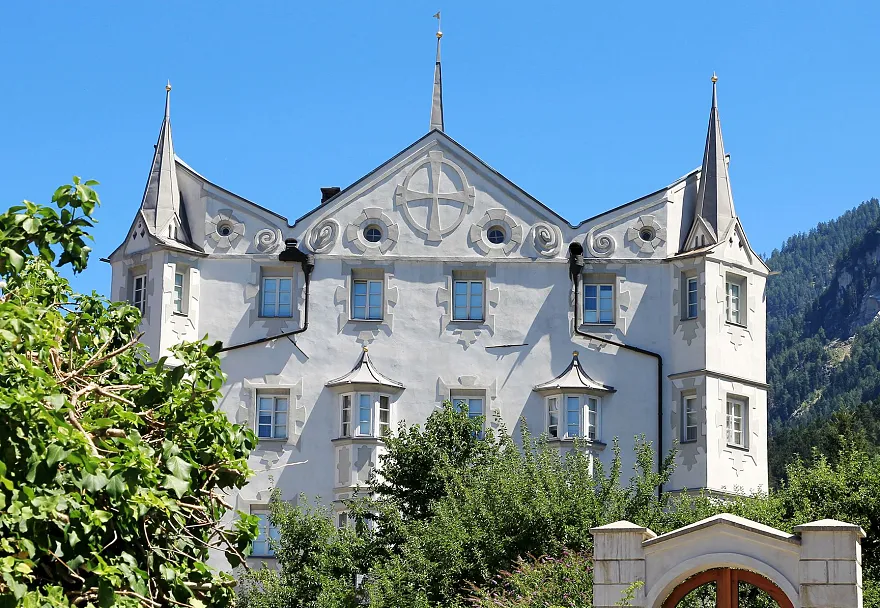
In 1522, Jakob Fugger ‘the Rich’ entered the business in Schwaz by acquiring shares in the mines. In 1546, his nephew Anton Fugger temporarily relocated the company’s headquarters from Augsburg to Schwaz, until the Augsburg merchant family withdrew from the Tyrolean mining industry in 1657. Two Fugger houses still serve as reminders of this era: the present-day town hall, the Fuggers’ first residence in Schwaz, and the Kreuzwegerhaus on Fuggergasse, which served as the headquarters for the mining operations from 1539 onwards. As a stop on the Fuggerstraße, which links European mining towns, the Karwendel silver region is one of the places where the history of the Fuggers is still tangible today.

Malerische Altstadtstraße mit historischen Gebäuden und einer Kirche.
Old Town

Schwaz

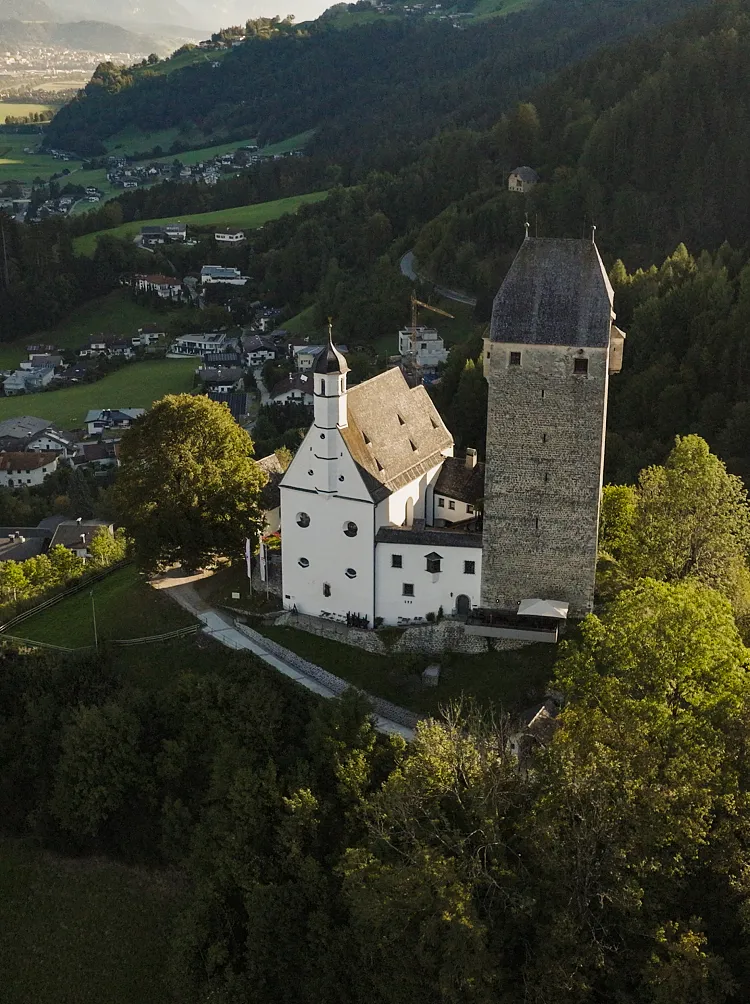
In Schwaz’s old town, there are many reminders of the era of mining. Above a number of doorways, an ‘Ore Step’ can still be seen today – a chunk of ore set into the wall, indicating that a miner’s family lived there. In the parish church of ‘Our Lady’, the largest Gothic hall church in Tyrol, three epitaphs commemorate members of the Fugger family. Because the miners once had their own chapel here, it is still known today as the Miners’ Church. In the cloister of the Franciscan monastery hangs a painting commemorating the time when a member of the Fugger family used his fortune to support the Habsburg Empire. High above the old town lies Freundsberg Castle, overlooking the town and the Inn Valley.

Une boîte en bois remplie de pièces argentées.
ten-silver coin
A gift is silver – joy is gold

Podcast

Deux personnes posent devant une porte en pierre.

Podcast episode –

A landmark and its history

In “Pure Diversity”, Manuela Kamper, together with curator Egon Spiß, explores the fascinating history of Freundsberg Castle, a landmark of the Karwendel Silver Region.

Un château blanc avec des tours sous un ciel bleu clair.

Podcast episode –

The History of the Fuggers

Presenter Manuela Kamper talks to Wiebke Schreier about Jakob Fugger, the historical link between Augsburg and the Karwendel Silver Regionas well as the Fugger legacy and current anniversary events.

Deux personnes posent dans une rue piétonne bordée de bâtiments historiques.

Podcast episode –

A tour packed with history and stories

City guide and art historian Anton Prock takes a stroll through the historic silver town of Schwaz with presenter Manuela Kamper. Together, they discover the traces of the former mining centre – from the parish church to the town hall and on to the Franciscan monastery – and learn how silver and copper once made Schwaz the second-largest town in the Habsburg Empire.

All 4

seasons